Black stain: the dark spots on children's teeth explained by Dr. Giorgia
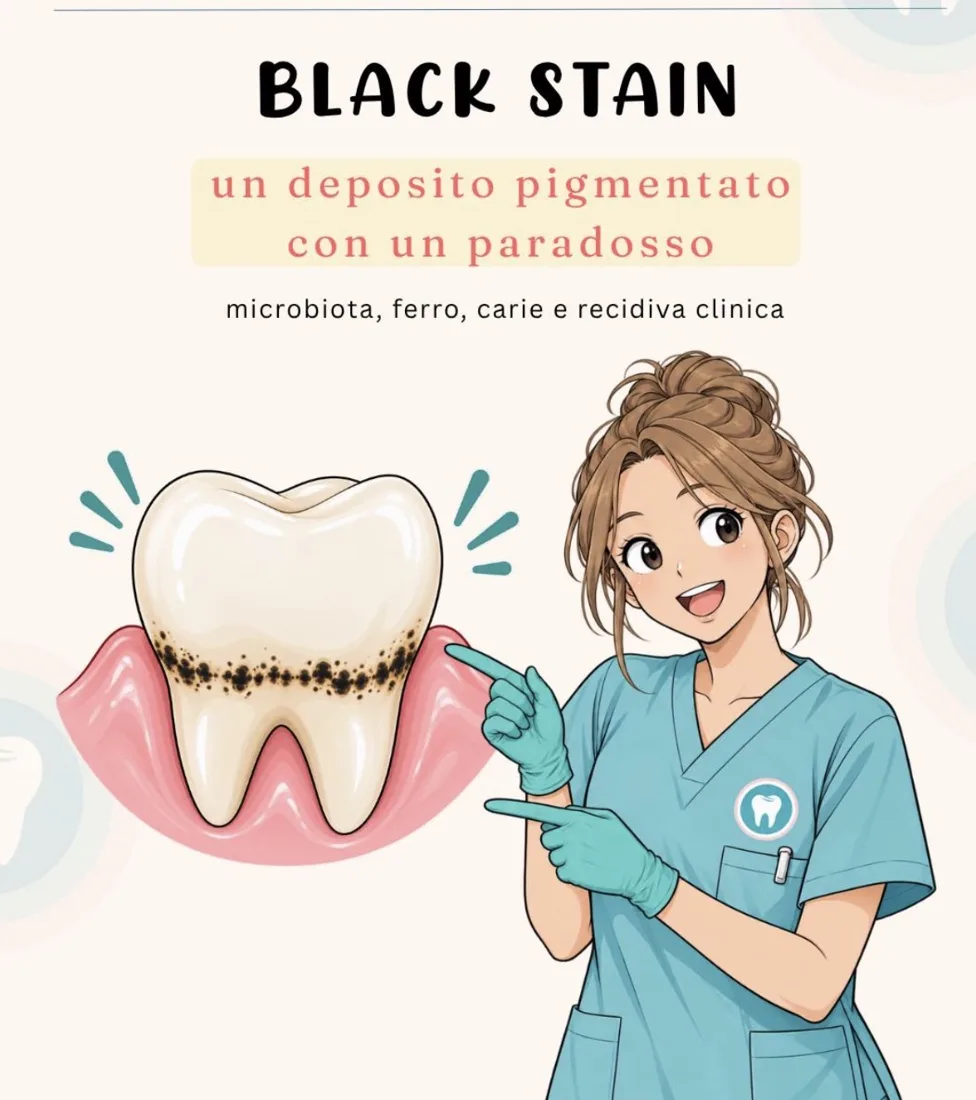
A line of dark dots along the gum line that won't brush away. It's not decay, it's not dirt: it's black stain, a pigmented deposit with a curious paradox.
Not just a stain
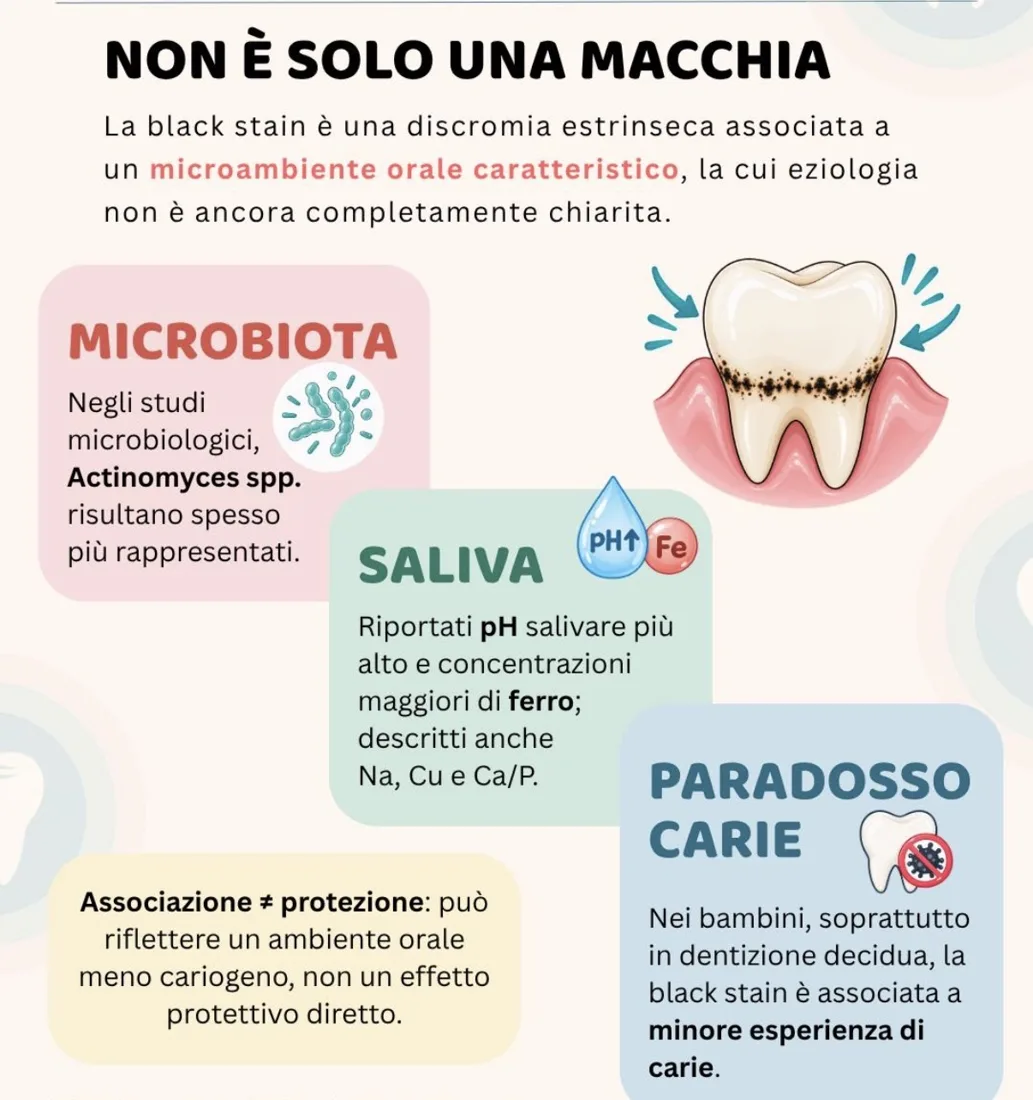
Black stain is an extrinsic discolouration: a pigmented deposit that forms on the tooth surface, typically as a line of black dots along the cervical third, next to the gum. It is associated with a characteristic oral micro-environment whose cause is not yet fully understood.
Microbiota: in microbiological studies, bacteria of the genus Actinomyces spp. are often over-represented in the plaque of children with black stain.
Saliva: a higher salivary pH and greater iron concentrations have been reported; differences in sodium, copper and calcium/phosphate ratio are also described. It is iron, binding to compounds produced by bacteria, that gives the deposit its black colour.
The caries paradox
Here's the surprising part: in children, especially in the primary dentition, black stain is associated with a lower caries experience. But beware: association is not protection. The stain may simply reflect a less cariogenic oral environment (higher pH, different microbiota), not a direct protective effect.
In practice: a child with black stain is not 'immune' to cavities and needs the same check-ups and hygiene as everyone else.
The score describes, but doesn't tell the whole story
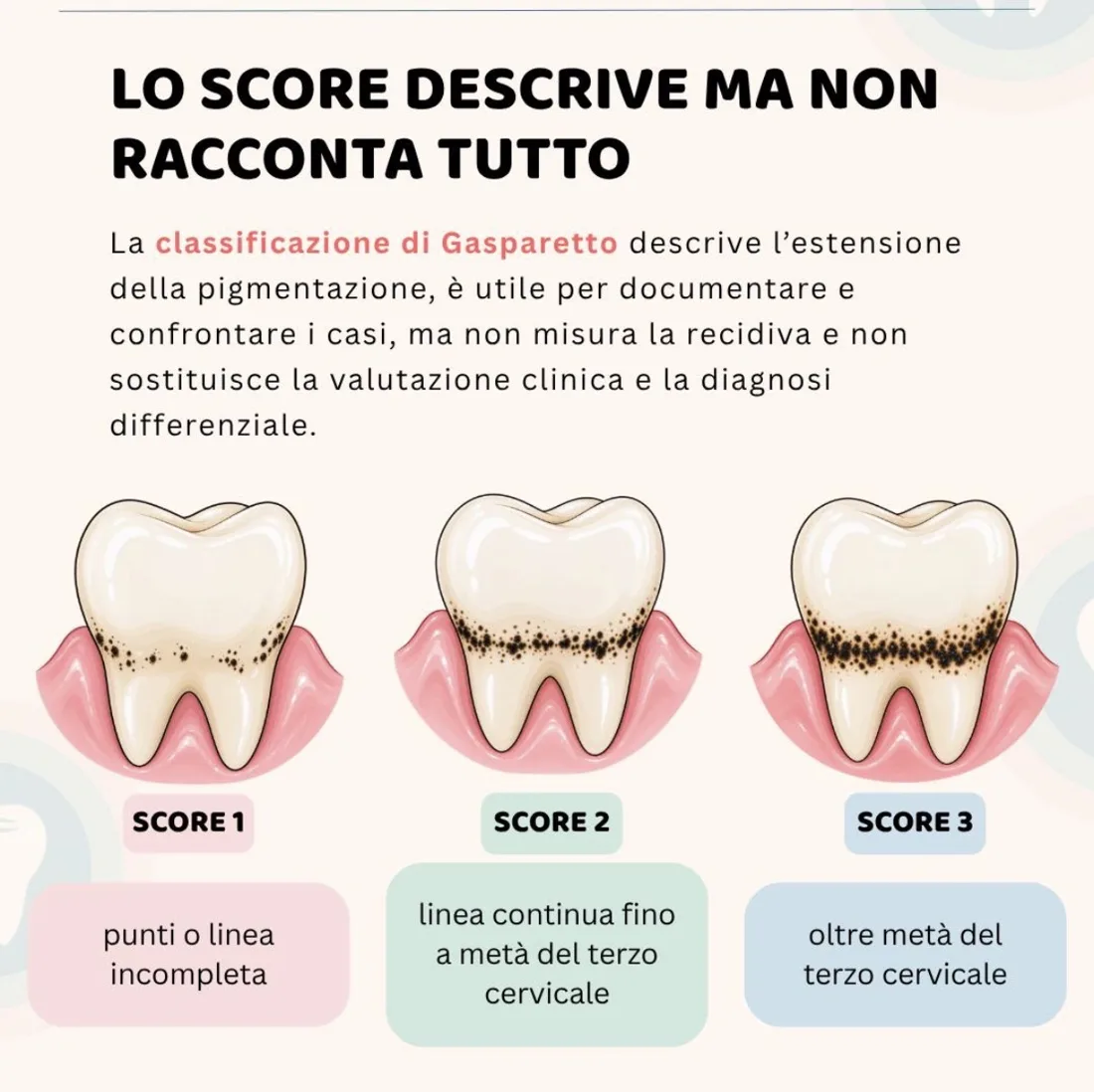
The Gasparetto classification describes the extent of pigmentation and is useful for documenting and comparing cases over time, but it does not measure recurrence and does not replace clinical assessment and differential diagnosis (with early decay, pigmented calculus or stains from food and iron supplements).
Score 1: dots or an incomplete line. Score 2: a continuous line up to half of the cervical third. Score 3: pigmentation beyond half of the cervical third.
What changes in practice: in the chair
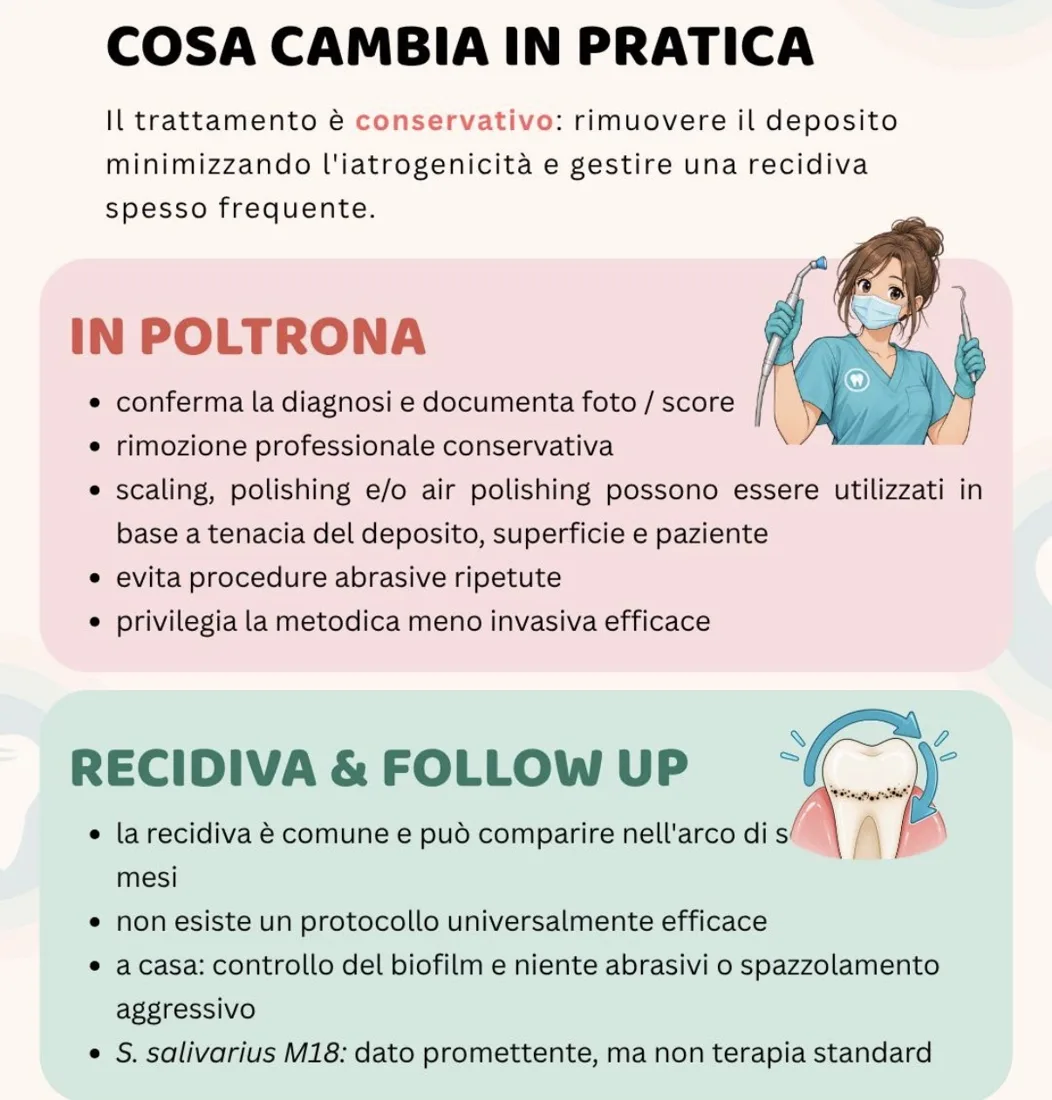
Treatment is conservative: the goal is to remove the deposit while minimising iatrogenic damage (i.e. without harming the enamel) and to manage a frequently recurring condition.
In the clinic we confirm the diagnosis and document it with photos and score; then we proceed with conservative professional removal. Scaling, polishing and/or air polishing are chosen according to the tenacity of the deposit, the surface and the child, avoiding repeated abrasive procedures and always favouring the least invasive effective method.
Recurrence and follow-up: what to do at home
Recurrence is common and may reappear within a few months: it's nobody's fault and there is still no universally effective protocol. It often tends to fade spontaneously with growth and the change of teeth.
At home the key is biofilm control with a soft toothbrush and fluoride toothpaste: no abrasive 'whitening' pastes, no baking soda and no aggressive brushing, which damage the enamel without solving the problem. The probiotic Streptococcus salivarius M18 is a promising finding, but not a standard therapy.
Noticed a line of dark dots on your child's teeth? Book a check-up with Dr. Giorgia at 051 814000: a few minutes are enough to clarify things and remove the stains calmly.
Questions about your child's teeth?
Call us: the first visit is a game, fear-free and no strings attached.